Overview
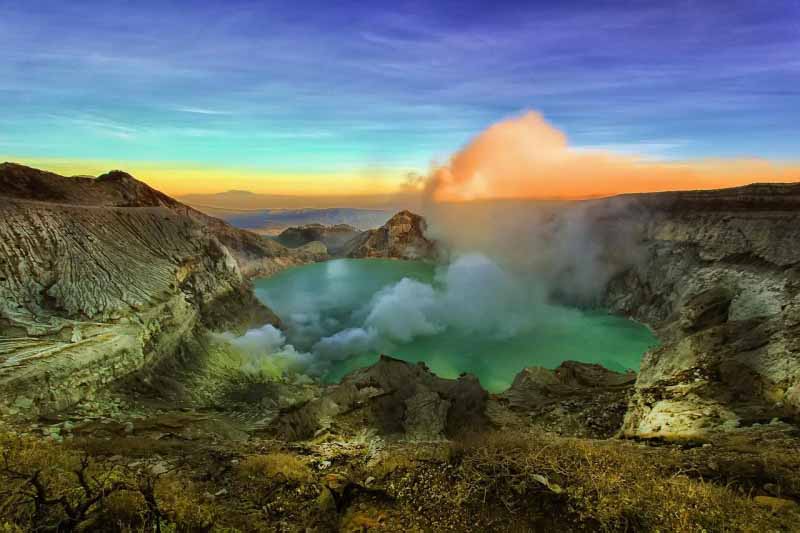
Ijen Crater sits atop Mount Ijen, on the border of Banyuwangi and Bondowoso Regencies in East Java. It is one of Indonesia’s most unique international tourist destinations, famous for its rare blue fire phenomenon and breathtaking sunrise views. Remarkably, there are only two places in the world where travelers can witness blue fire — here in Ijen and in Iceland.
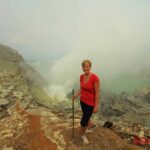
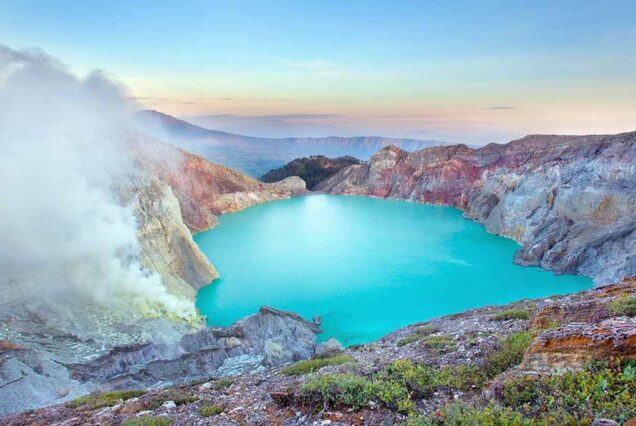
The crater itself is vast, filled with turquoise acidic water, and surrounded by rugged volcanic landscapes. Its combination of natural wonders and cultural encounters makes Ijen a must‑visit destination for adventure seekers, photographers, and nature enthusiasts.
Routes to Ijen Crater
Visitors can reach Ijen via two main routes:
- Bondowoso Route: Passing through towns and coffee plantations on the slopes of Mount Ijen.
- Banyuwangi Route: Recommended for travelers coming from Bali.
Both routes meet at Paltuding, the base camp and starting point of the trek to the summit crater.
Blue Fire Phenomenon
To witness the blue flames, climbers must begin their trek around midnight. The phenomenon is best seen between 01:00 am and 04:00 am, when sulfur gases ignite, creating glowing blue light.
- The trek takes about 1.5–2 hours to reach the crater rim.
- The flames are partially obscured by sulfur fumes, but can be observed clearly from the crater’s edge.
- As dawn breaks, the flames fade, replaced by a spectacular sunrise over the volcanic landscape.
Sulfur Miners of Ijen
Along the trek, visitors encounter traditional sulfur miners who work under extreme conditions:
- Using simple tools, they extract sulfur, shape it into boulders, and carry loads of 80–100 kg in bamboo baskets.
- Each kilogram of sulfur earns them about Rp 700, highlighting the harsh realities of their labor.
- Despite the risks of inhaling sulfur fumes daily, miners continue this work to support their families.
Meeting these miners offers a humbling glimpse into the human endurance behind Ijen’s natural beauty.
Visitor Experience
Climbing Ijen is challenging but rewarding. The trek requires stamina, but the payoff is unforgettable:
- Witnessing the blue fire at night.
- Watching the sunrise over the crater rim.
- Experiencing the cultural encounter with sulfur miners.
For travelers in East Java, visiting Ijen Crater is a once‑in‑a‑lifetime adventure that combines natural wonder with human resilience.
Why Visit Ijen Crater
- Rare blue fire phenomenon visible only in two places worldwide.
- Stunning sunrise views from the crater rim.
- Cultural encounters with hardworking sulfur miners.
- Accessible routes from Bondowoso and Banyuwangi.
- A challenging yet rewarding trek for adventure lovers.
Entrance Fee (2025):
- Local Tourists (Indonesian Citizens):
- Weekdays: Rp 20,000 per person
- Weekends/Public Holidays: Rp 30,000 per person
- International Tourists (Foreign Visitors):
- Weekdays: Rp 150,000 per person
- Weekends/Public Holidays: Rp 150,000 per person
All visitors must register at Paltuding Post, the official base camp, before starting the trek. Online booking is now required, with terms and conditions set by the Balai Besar Konservasi Sumber Daya Alam (KSDA) Jawa Timur.
Travel Tips
Trekking Preparation
- Start Early: To see the blue fire, begin your trek around midnight. Arrive at Paltuding Post by 11:00 pm to register and prepare.
- Fitness Level: The trek takes 1.5–2 hours uphill. Moderate fitness is required, but guides are available for assistance.
- Gear Essentials: Bring a headlamp or flashlight, sturdy trekking shoes, warm clothing, gloves, and a mask to protect against sulfur fumes.
Safety and Health
- Sulfur Gas: The crater emits strong sulfur fumes. Carry a gas mask or rent one at Paltuding. Avoid staying too long near the crater floor.
- Altitude: At 2,799 m above sea level, temperatures can drop to 5–10°C at night. Dress in layers to stay warm.
- Hydration: Carry enough water, but avoid plastic waste — refill bottles where possible.
Best Season to Visit
- Dry Season (April–October): Clear skies, safer trekking paths, and better visibility of the blue fire and sunrise.
- Rainy Season (November–March): Trails become slippery and fog may obscure views. Trekking is still possible but more challenging.
Cultural Encounters
- Respect the Miners: Sulfur miners carry loads of 80–100 kg daily. Avoid blocking their paths and be mindful when taking photos.
- Local Guides: Hiring a guide supports the community and ensures safety, especially for first‑time climbers.
Packing Checklist
- Warm clothing (jackets, gloves, beanie)
- Trekking shoes with good grip
- Flashlight or headlamp
- Gas mask or scarf for sulfur fumes
- Snacks and water (no shops at the crater)
- Camera for sunrise and blue fire photography